Since the long blog posts, which are way too much work, don’t seem to work for me, I decided to get back at it with shorter posts that focus on narrower topics.
Recently I participated in the Cozy Winter Jam 2026 where I teamed up with some very talented people to make the game Woodland Whispers Coffeehouse.
Considering the 3 day time constraint, yet possibly long play time, I had to come up with some ideas on how to “stretch” the music a bit more.
My first idea was to write a piece that basically consists of somewhat different parts (to already have some variation):
Firstly, a slow string/horn ostinato with melodies
Secondly, a part that one might call “succession of variations”, which refer to the previous material but only in fragments with more musical rests in between.
Very simple setup in FMod:
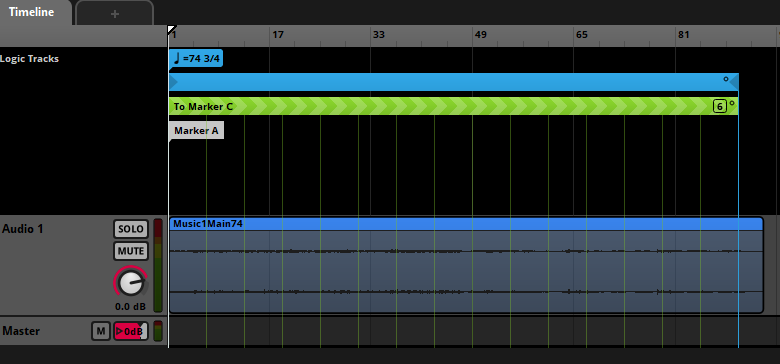
But between those parts I left a somewhat “musically inactive” point that also enables looping from there back to the beginning.
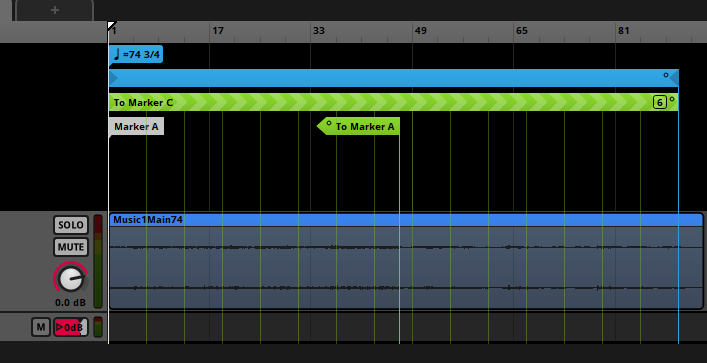
The solo note played by the flute will hang over into the new loop beginning to hide the loop transition even further - thus, in this case, it was also important to not have any other musical material play at the same time.
But why stop there? So I started to just try and see if there are other looping points that I can just find by experimenting with the audio, which I hadn’t originally written in there.
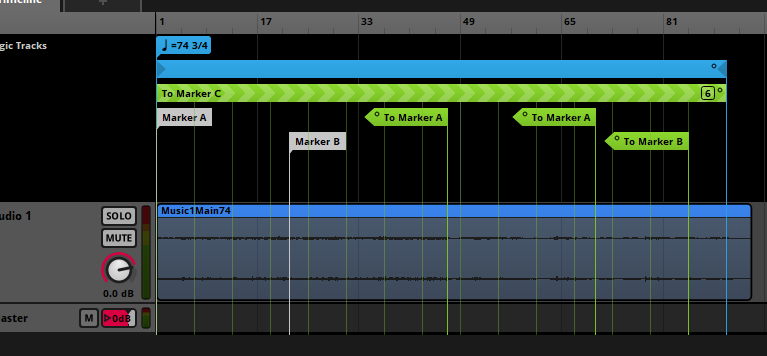
As you can see, there were a couple and even one that does not transition to the beginning but to some position somewhere in the first 5th of the piece.
All these small transition points also had a probability set so each time some other transition would occur
I left it at around a 30-50% chance.
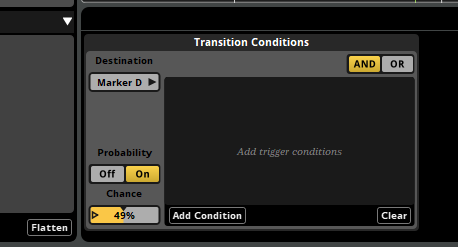
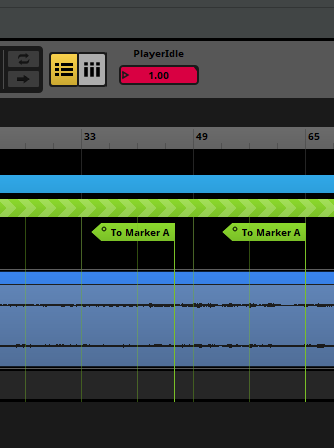
You probably already saw the big “To Marker C” transition region, which is adding an additional layer to this.
The idea is that if the player becomes somewhat less active or inactive (we were thinking that this could also turn into an idle-game), a parameter would activate this transition, and it would switch to a more atmospheric track that uses some of the instruments.
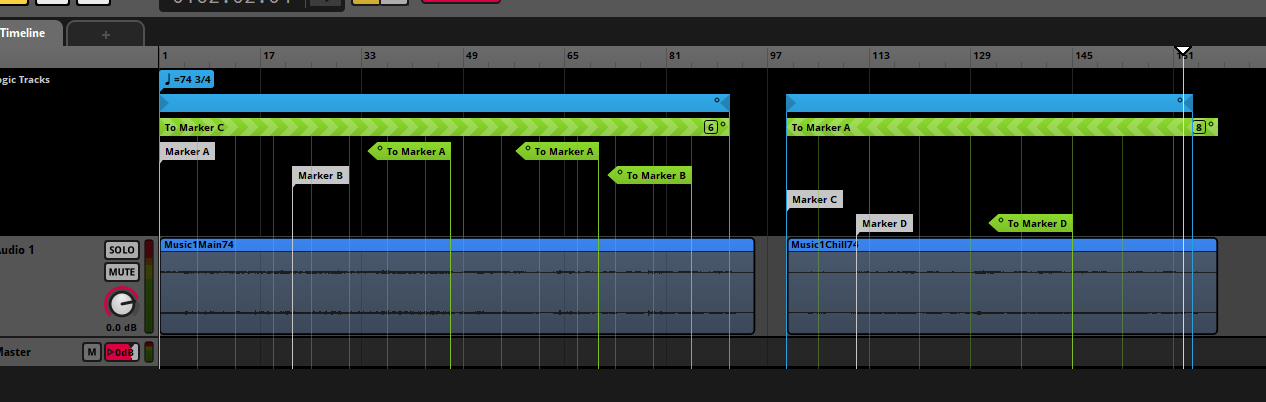
As well as in the first track this one also uses a smaller probabilstic loop inside of itself.
If the player would pick up playing more actively again, the music would transition back to the first track, albeit it would only happen every 8 bars, so it’s not an immediate change.
Of course those loops themselves can have multiple layers which are randomly chosen:
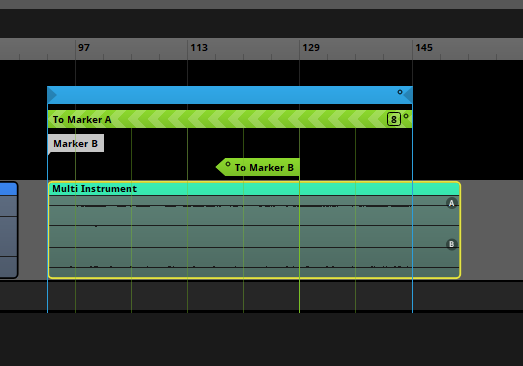
This should give ample variation for the music, but looping points should be taken into consideration when composing. I will definitely work more with this and expand on posts like this.